
Refinance when the math works, not when the ads say so
A refinance replaces your current mortgage with a new one. Done well, it can lower the payment, shorten the term, switch you off an adjustable rate, or pull equity out for a clear purpose. Done poorly, it costs more than it saves. Summit Lending LLC (NMLS 2394434) runs the break-even with you before anyone pays application fees.
We serve borrowers in Utah, Texas, Idaho, Wyoming, Arkansas, and Arizona from 4542 W 14800 N, Garland, UT 84312. Call 385-200-1470 or email [email protected].
Rate context for fall 2026
Freddie Mac's weekly survey averaged 7.28% on the 30-year fixed for the week of October 1, 2026, up from 7.03% the prior week and 6.34% a year earlier. The 15-year fixed averaged 6.60%. If your current rate is well below today's survey averages, a rate-and-term refinance usually does not pay. If you refinanced or purchased near the recent highs, the conversation is worth having. Survey averages are not quotes.
Refinance paths we compare
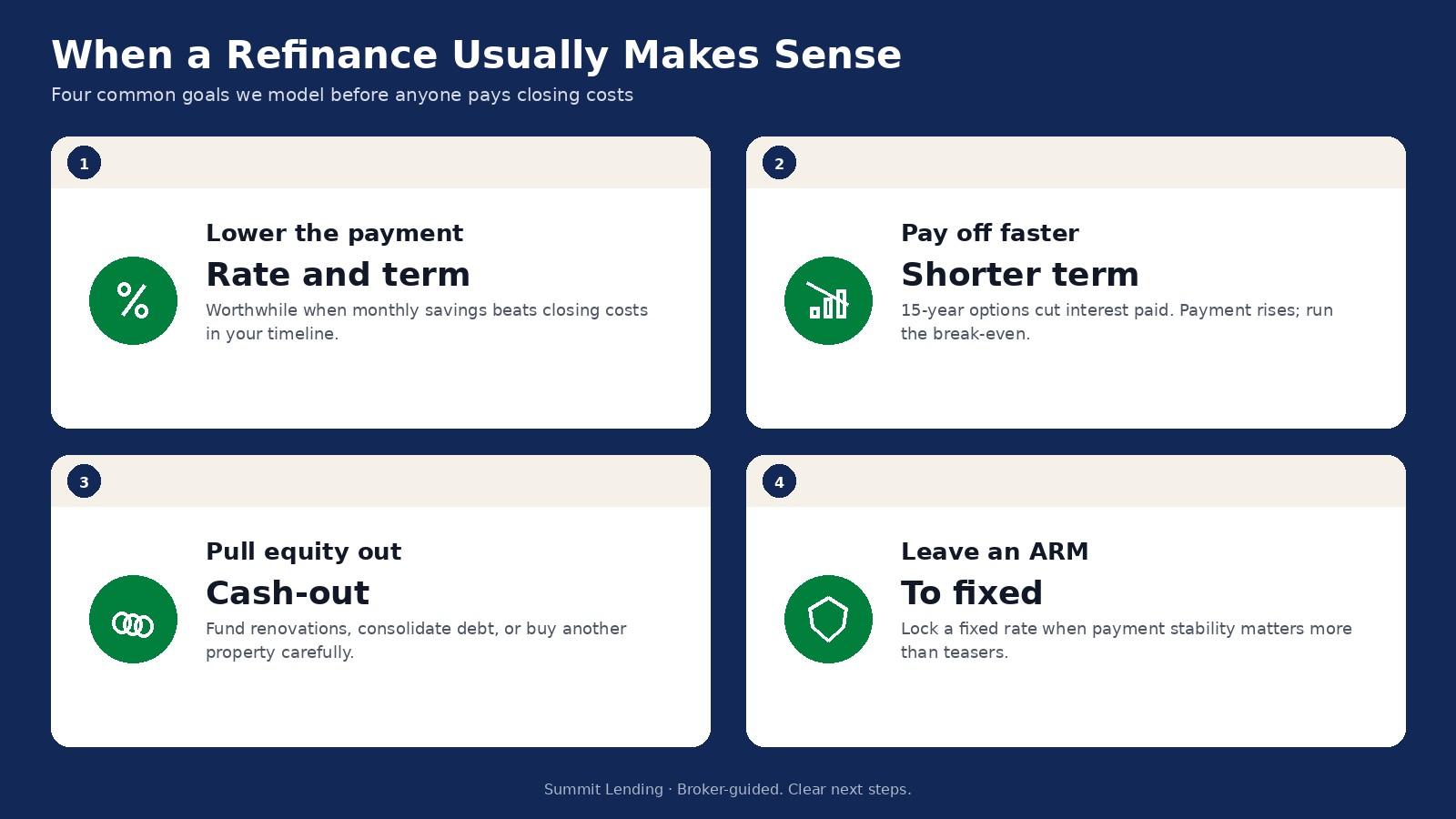
- Rate-and-term refinance. Change the rate, the term, or both without taking cash out. Best when monthly savings clear closing costs inside the years you expect to keep the loan.
- Cash-out refinance. Borrow against equity for renovations, debt consolidation, or another clear use. Payments rise, so we stress-test the new payment first.
- ARM to fixed. Trade payment uncertainty for a fixed rate when stability matters more than a teaser rate.
- Streamline options. Some FHA and VA borrowers can use lighter documentation paths when they qualify. We will say when a streamline is better than a full refinance.
Building instead of refinancing? See construction loans. Buying another property? Start with purchase loans.

State refinance hubs
- Utah refinance and Utah mortgages
- Texas refinance and Texas mortgages
- Idaho refinance and Idaho mortgages
- Wyoming refinance and Wyoming mortgages
High-activity counties often change the equity and tax picture: Salt Lake County, Utah County, Harris County, Dallas County, Ada County.
Questions we answer before you apply
- How many months until closing costs are recovered by the new payment?
- Are you solving for payment, term, cash, or rate stability?
- How long do you expect to keep the home and the loan?
- Would a home equity option or a sale beat a cash-out refinance?


Related pages
Use the loan calculator, get a fresh preapproval if you are also shopping, or review all mortgage options. Homeowners 62 and older comparing cash-out with staying put should read reverse mortgages.
Costs that belong in every refinance worksheet
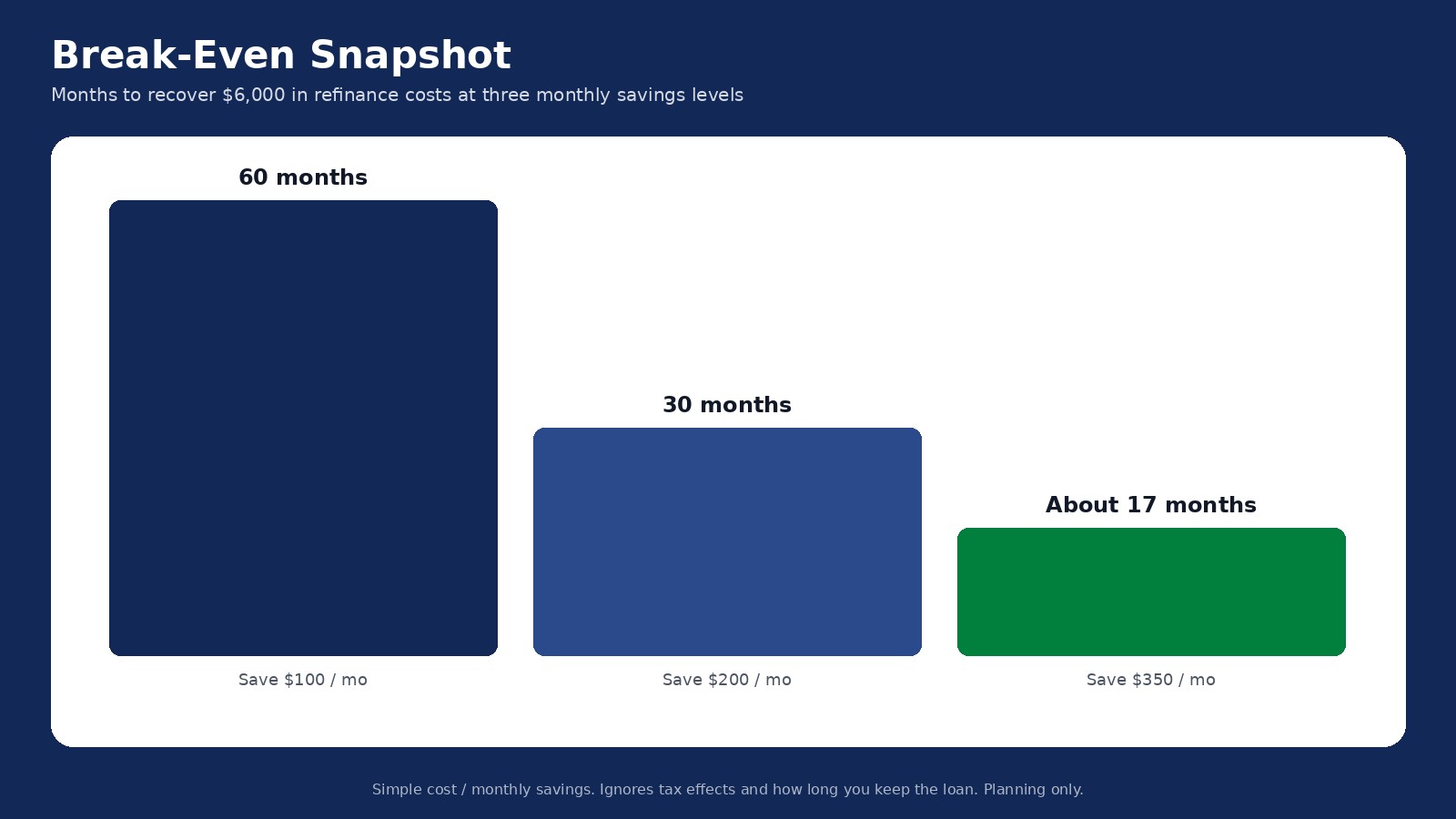
Appraisal, title, origination, prepaid interest, and escrow setup can erase a headline rate advantage. We list estimated costs beside monthly savings so you can see the break-even in months, not marketing copy. If you plan to move within two years, even a meaningful payment cut may not repay the friction. If you plan to stay ten years, a smaller monthly save can still win.
Credit events matter. A recent late payment, new installment loan, or large unseasoned deposit can change pricing or eligibility mid-stream. Tell us about those items up front. It is cheaper to adjust the plan before you pay for an appraisal.
Cash-out alternatives we often compare
Not every equity need should become a full refinance. Depending on your rate, remaining term, and credit, a home equity option or a smaller second lien can leave a low first mortgage untouched. The reverse is also true: if your first rate is already high, rolling everything into one new first mortgage can be cleaner. We compare total interest and payment shapes, not just the cash you receive at closing.
Homeowners 62 and older who want to stay put should also read reverse mortgages before choosing cash-out. Those tools solve different problems.
Seasoning, appraisal, and title friction
Recent cash-out activity, a quick resale, or a title quirk can slow a refinance even when the rate math looks perfect. Appraisal waivers appear on some files and not others. Rural properties, unique homes, and recent renovations are more likely to need a full appraisal. We flag those items during the first review so your timeline stays honest.
If your goal is a lower payment and your current rate is already competitive, we may recommend waiting rather than forcing a refinance. That recommendation is part of the job.
Refinancing a second home or rental
Investor and second-home refinances follow different overlays than primary residences. Expect different down-payment or equity minimums, and expect underwriting to look harder at rental income documentation. When the property is clearly commercial in use, switch over to commercial loans.
Information on this page is for general education. It is not a commitment to lend. Loan availability, terms, and pricing depend on your credit, income, assets, property, and lender overlays. Summit Lending LLC, NMLS 2394434.
Related Articles


Top Reasons to Refinance Your Mortgage and Why It Works
A 2026 refinance guide aligned to 6% normalization: when payment relief, ARM-to-fixed, PMI removal, cash-out, or term changes make sense, plus break-even math and when to wait.
Mortgage Rates Above 7%: What Utah Buyers Should Do Now (Sept 2026)
Freddie Mac’s 30-year fixed averaged 7.03% the week of September 24, 2026, after the Fed’s mid-month hike. Here is how Utah buyers and homeowners can plan payments, use improving Salt Lake County inventory, and keep the 6% normalization mindset honest when headlines sit above 7%.

Utah Seller Concessions and Rate Buydowns in a Higher-Inventory Fall Market (Oct 2026)
With Salt Lake County at 4.2 months of supply and sellers offering more credits nationally (Redfin via Deseret News, Sept 22, 2026), Utah buyers can negotiate closing cost help and rate buydowns on resale homes. Here is how to structure the ask without guessing.
What Does a $475,000 Phoenix Home Cost at 7.40%? Full PITI (Oct 2026)
Freddie Mac's 30-year average hit 7.40% on Oct. 8 as Greater Phoenix pending sales plunged about 40% in September. Here is what a $475,000 Valley home really costs each month once you add taxes, insurance, HOA, and mortgage insurance, and how a price cut changes that number more than a closing credit.